Essential DIY Tools: The Complete Starter Kit for 2026
The five tools every DIYer should own first — and exactly which one to buy in each category. Your no-overwhelm guide to building a tool kit that lasts.

- Category
- Buying Guides
- Tools tested
- 5
- Read time
- 4 min
- Updated
Walking into a hardware store as a new DIYer is overwhelming — there are entire aisles of tools, and almost none of them tell you what you actually need. The good news: you don't need much. Five tools will get you through the vast majority of home projects, from hanging a shelf to assembling furniture to fixing the wobbly thing in the bathroom.
This is the hub for everything we recommend. Below are the five tools to buy first, the exact pick in each category, and links to our full, hands-on reviews when you want to dig deeper.
The 5 tools every DIYer should own first
Drag to compare all 5 →
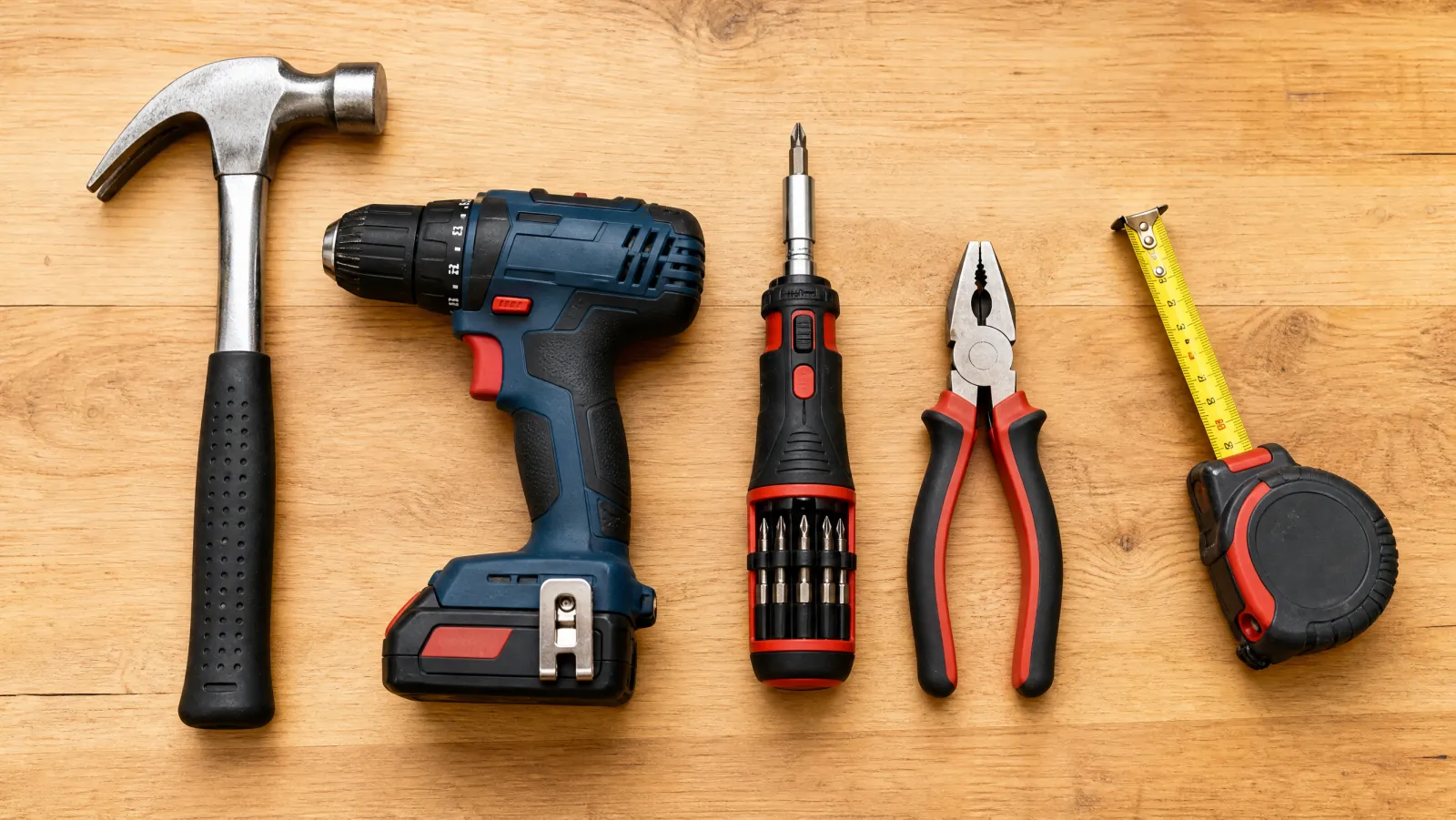
If you buy nothing else, buy these five. A cordless drill for making holes and driving screws, a claw hammer for everything you hit (or pull), a ratcheting screwdriver for fasteners, a set of pliers for gripping and cutting, and a tape measure so it all fits. Here's why each earns its place.
1. A cordless drill — the one power tool to buy first
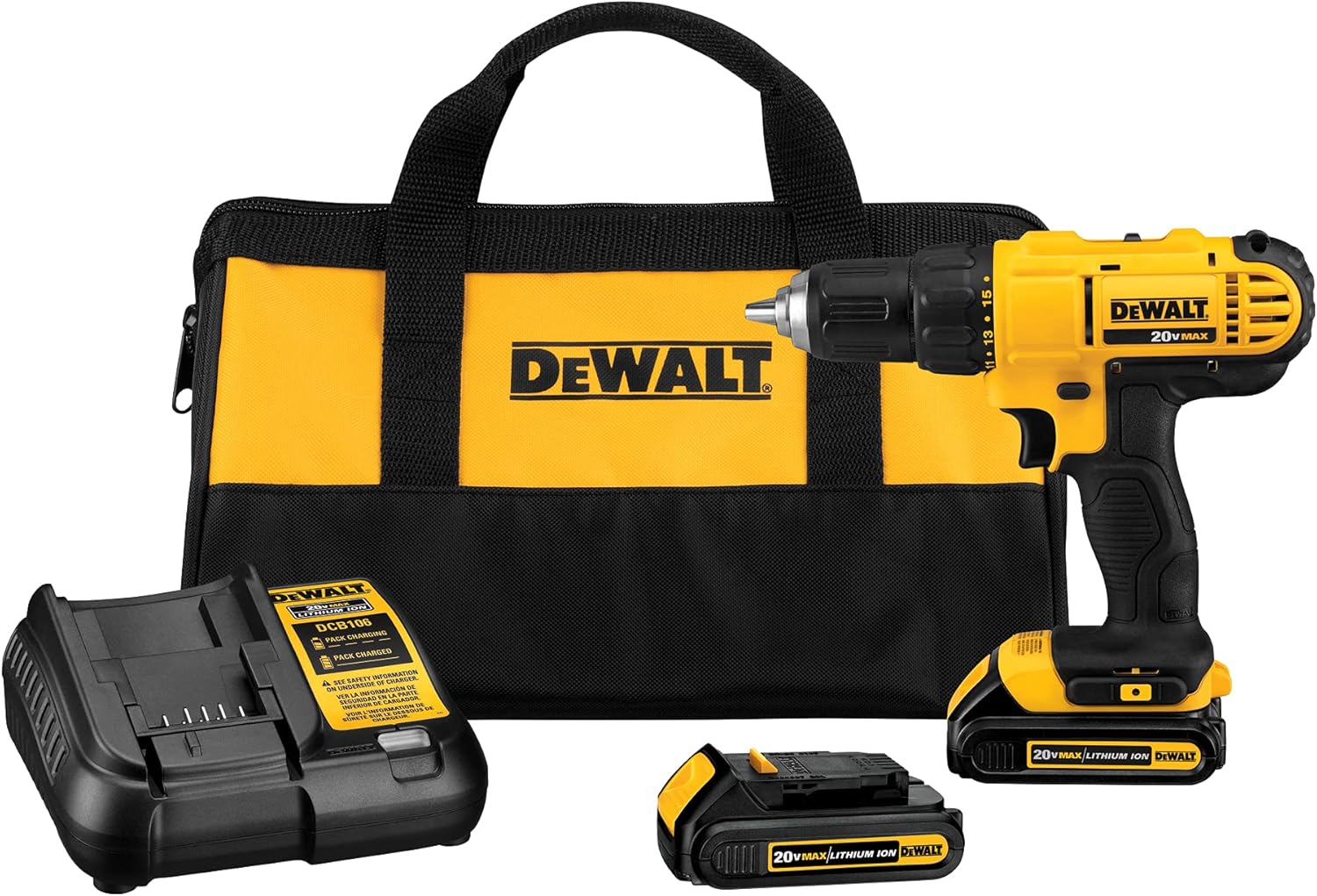
DEWALT DCD771C2 Drill
A compact, two-speed 20V drill kit with two batteries — the one power tool every DIYer should own first.
Pros
- Two batteries and charger included
- 1/2-inch chuck and two speeds handle drilling and driving
- Huge 20V MAX battery ecosystem to grow into
Cons
- Brushed motor (fine for DIY, less efficient than brushless)
Nothing earns its keep faster than a cordless drill. It drills pilot holes, drives screws without stripping them, and with a few accessories it sands, mixes and more. We chose the compact DEWALT 20V kit because it ships with two batteries and plugs you into one of the biggest tool ecosystems out there.
Read the full breakdown in our guide to the best cordless drills for DIY.
2. A claw hammer — the most-used hand tool you own

DEWALT 16 oz Hammer
A one-piece forged-steel 16 oz claw hammer with an anti-vibration grip — the do-everything choice.
Pros
- One-piece steel head can never loosen
- Balanced 16 oz weight suits nearly any job
- Anti-vibration grip
Cons
- Transmits a little more shock than a wood handle
A hammer is the tool you'll reach for without thinking — to seat a nail, tap a joint together, or pull a bent nail back out. A one-piece 16 oz steel hammer like this DEWALT lasts a lifetime.
See all five of our favorites in hammers are an essential DIY tool.
3. A ratcheting screwdriver — replaces a drawer full of drivers

Wera KK60 RA
A fine-tooth ratcheting screwdriver with bits stored in the handle — replaces a whole drawer of drivers.
Pros
- Fine 60-tooth ratchet works in tight spaces
- Bits live in the handle, always there when you need them
- Wera build quality
Cons
- Pricier than a basic driver set
One good multi-bit ratcheting screwdriver does the work of a dozen single drivers, with the bits stored right in the handle. The Wera Kraftform Kompakt is the one we hand to everyone.
Compare the field in our best ratchet screwdrivers roundup, or read why one screwdriver can replace your whole set.
4. A set of pliers — grip, cut and bend

Husky 4-Piece Pliers
Diagonal, long-nose, slip-joint and groove-joint pliers in one high-leverage set — covers grip, cut and bend.
Pros
- Four most-used plier types in one buy
- High-leverage design for less hand fatigue
- Great value for a full set
Cons
- Not a specialist's precision set
Pliers grip what your fingers can't, cut wire, and bend metal. A four-piece set covers the types you'll actually use — diagonal, long-nose, slip-joint and groove-joint — in a single, affordable buy.
More options in why you need a good pair of pliers.
5. A tape measure — so everything fits

STANLEY FatMax 25 ft
A wide, tough blade with long standout — and you get two, so there's always one within reach.
Pros
- Long standout reaches across a room before it folds
- Durable blade coating
- Two-pack means one for the bench, one for the bag
Cons
- Bulkier than a slim pocket tape
Measure twice, cut once. A good 25-foot tape with a wide, stiff blade is the difference between a shelf that's level and one that isn't. This STANLEY FatMax comes as a two-pack so you always have one nearby.
And because a tape only helps if you can read it, see how to use a tape measure like a pro.
What to add next
Once the core five are in your drawer, add tools as your projects demand them rather than all at once:
- On a tight budget? Start with our best DIY tool kit for beginners on a budget — the same five jobs covered for less.
- Tiling a bathroom or backsplash? You'll want the right cutter — see the 5 best DIY tile cutters.
- Building furniture or framing? A heavier hammer and more drill bits earn their place fast.
Frequently asked questions
What are the most essential tools for a beginner DIYer?
A cordless drill, a 16 oz claw hammer, a multi-bit ratcheting screwdriver, a set of pliers and a 25-foot tape measure. Those five handle the large majority of household repairs and assembly jobs.
Do I really need a cordless drill, or is a screwdriver enough?
For occasional small fixes a good ratcheting screwdriver is enough, but the moment you're driving more than a few screws or drilling into wood or drywall, a cordless drill saves enormous time and effort. It's the first power tool we recommend.
How much should I spend on a starter tool kit?
You can build a solid five-tool kit for well under a couple hundred dollars. Spend the most on the drill and the screwdriver, where quality matters most, and you can save on the rest. Our budget starter kit guide shows exactly how.
About the Author
Cheryl Thompson
Cheryl Thompson is the tools editor at The DIY Tool Review. A lifelong fixer and self-confessed tool addict, she has spent years buying, borrowing and wearing out hand and power tools across home renovation, furniture building and everyday repairs. She writes hands-on, no-nonsense reviews to help fellow DIYers spend their money on the tools that actually last.