Hammers Are an Essential DIY Tool: The 5 Best for 2026
A good claw hammer is the first tool every DIYer should own. Here are the five we reach for most — from a do-everything 16 oz pick to a heavy framing hammer — plus how to choose the right one.

- Category
- Hand Tools
- Tools tested
- 5
- Read time
- 5 min
- Updated
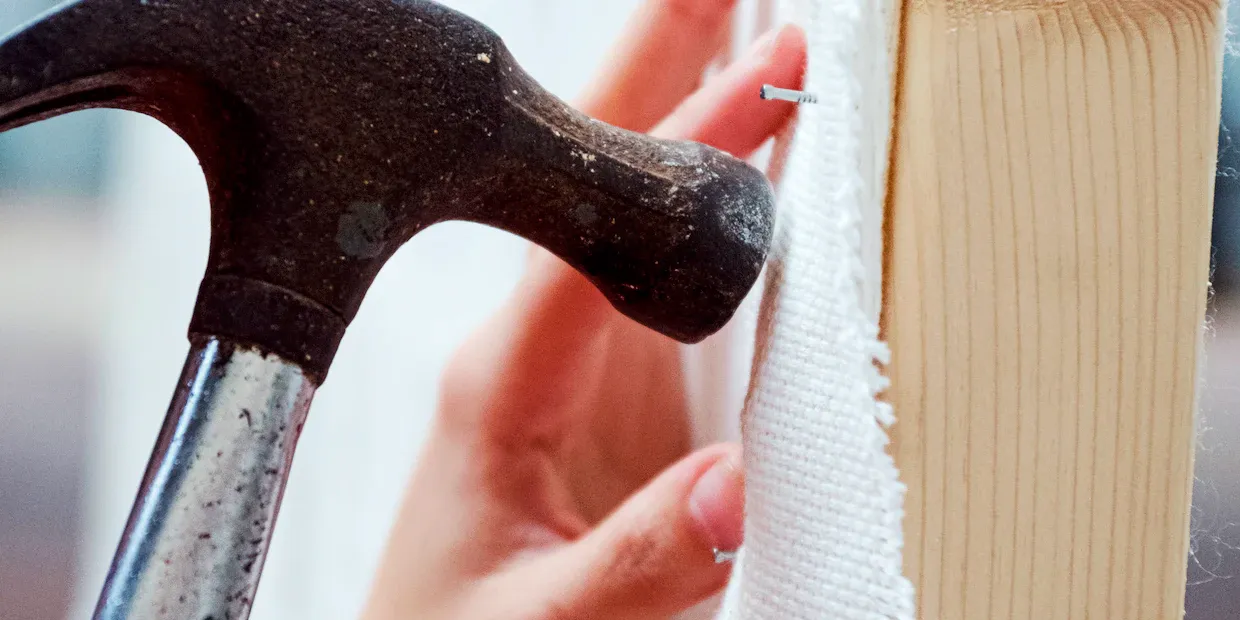
A claw hammer is the single most useful tool you can own. Before the cordless drill and long before the fancy stuff, the hammer is what hangs the picture, builds the shelf, taps the joint together and pulls the bent nail back out. If you're putting together a first kit, this is where to start.
Below are the five hammers we reach for most, why each one earns its spot, and a short guide to picking the right weight and handle for the work you actually do.
At a glance: our top picks
Drag to compare all 5 →
Our overall pick is the DEWALT 16 oz steel curved-claw hammer — a one-piece forged head and an anti-vibration grip make it the most "buy it once" option for everyday DIY. If you're watching the budget, the CRAFTSMAN 16 oz fiberglass does 90% of the same work for less.
How to choose the right hammer
You don't need a wall of hammers. You need the right weight, the right handle, and the right face for your work.
Weight
For general household DIY, a 16 oz hammer is the sweet spot — heavy enough to drive a nail in a few swings, light enough to control for an hour without your forearm complaining. Step up to 20–22 oz only if you're framing, building a deck, or doing demolition, where the extra mass does the work for you.
Handle material
- Forged steel (one piece) — the head can never fly off. Toughest option; transmits the most vibration. The Estwing E3-16C is the classic example.
- Fiberglass — a great balance of durability, shock absorption and price. Our value picks from CRAFTSMAN and STANLEY use it.
- Wood (hickory) — the most comfortable swing and easy to replace, but it can dry out and loosen over the years.
Face type
A smooth face is what you want for almost everything around the house — it won't leave waffle marks on trim or drywall. A milled (waffle) face, like the one on the Spec Ops 22 oz framing hammer, grips nail heads so they don't skip, which is perfect for framing but will scar anything you care about.
The 5 best hammers for DIY
1. DEWALT 16 oz Steel Curved-Claw — our overall pick

DEWALT 16 oz Steel Claw
A one-piece forged-steel 16 oz hammer with an anti-vibration grip — the best all-rounder for everyday DIY.
Pros
- One-piece forged steel — the head can never loosen
- Anti-vibration grip soaks up sting
- Balanced 16 oz weight suits almost any household job
Cons
- Steel handle transmits a little more shock than wood
- Slightly heavier than a fiberglass equivalent
If you buy one hammer, make it this one. The one-piece forged-steel construction means there is no head-to-handle joint to ever work loose, and the anti-vibration grip takes most of the sting out of a missed swing. At 16 oz it's balanced for everything from tapping a finishing nail to knocking together a 2×4 frame.
2. CRAFTSMAN 16 oz Fiberglass — best value
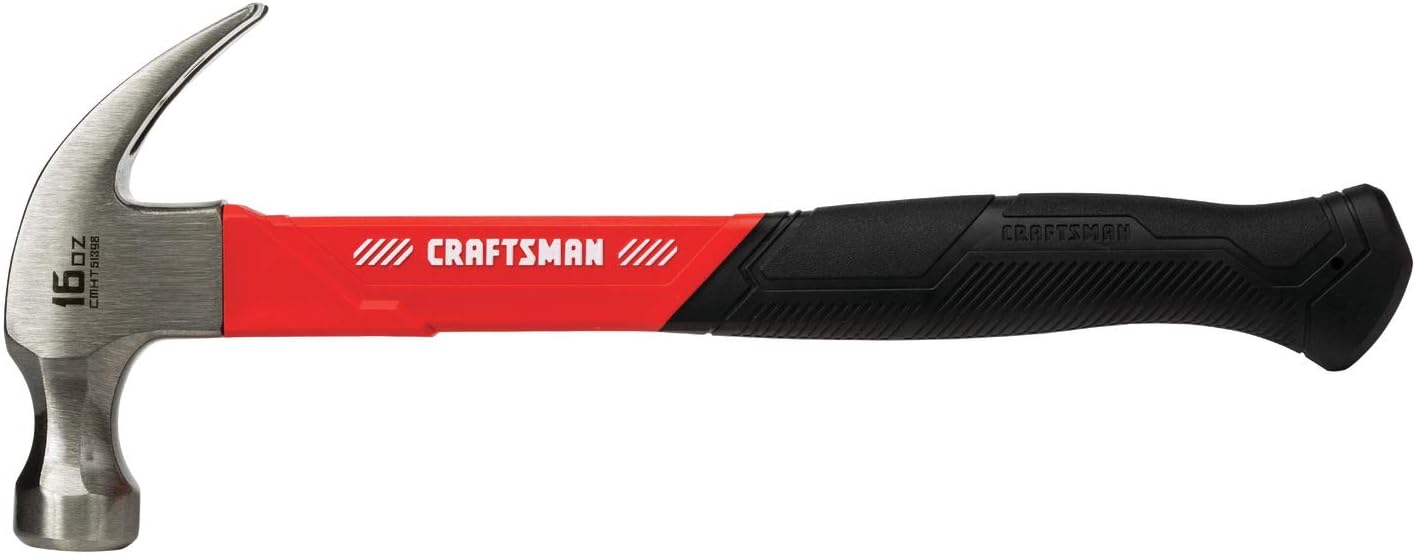
CRAFTSMAN 16 oz Fiberglass
A budget-friendly fiberglass-handled hammer with a comfortable rubber grip and a smooth face.
Pros
- Fiberglass handle dampens vibration well
- Comfortable over-molded rubber grip
- Hard to beat for the price
Cons
- Two-piece design isn't as bombproof as forged steel
The CRAFTSMAN is the hammer we recommend when someone wants a genuinely good tool without overthinking it. The fiberglass handle absorbs shock, the rubber grip is comfortable, and it costs noticeably less than a forged-steel hammer. It's a fantastic first hammer and a no-stress one to lend out or leave in the car.
3. Spec Ops 22 oz Framing Hammer — best for framing

Spec Ops 22 oz Framing
A heavy 22 oz framing hammer with a milled face that bites nails — built for decks, framing and demolition.
Pros
- 22 oz head drives big nails fast
- Milled (waffle) face grips nail heads so they don't skip
- Shock-absorbing grip and a straight rip claw for prying
Cons
- Too heavy for trim and delicate work
- Milled face will mar finished surfaces
When you graduate from hanging shelves to building them — decks, stud walls, subfloor — you want mass and a face that won't skate off the nail. The Spec Ops delivers both: a 22 oz head, a milled face that bites, and a straight rip claw for prying boards apart. It's overkill for trim work, but for framing it turns a five-swing nail into a two-swing nail.
4. Estwing E3-16C — most durable
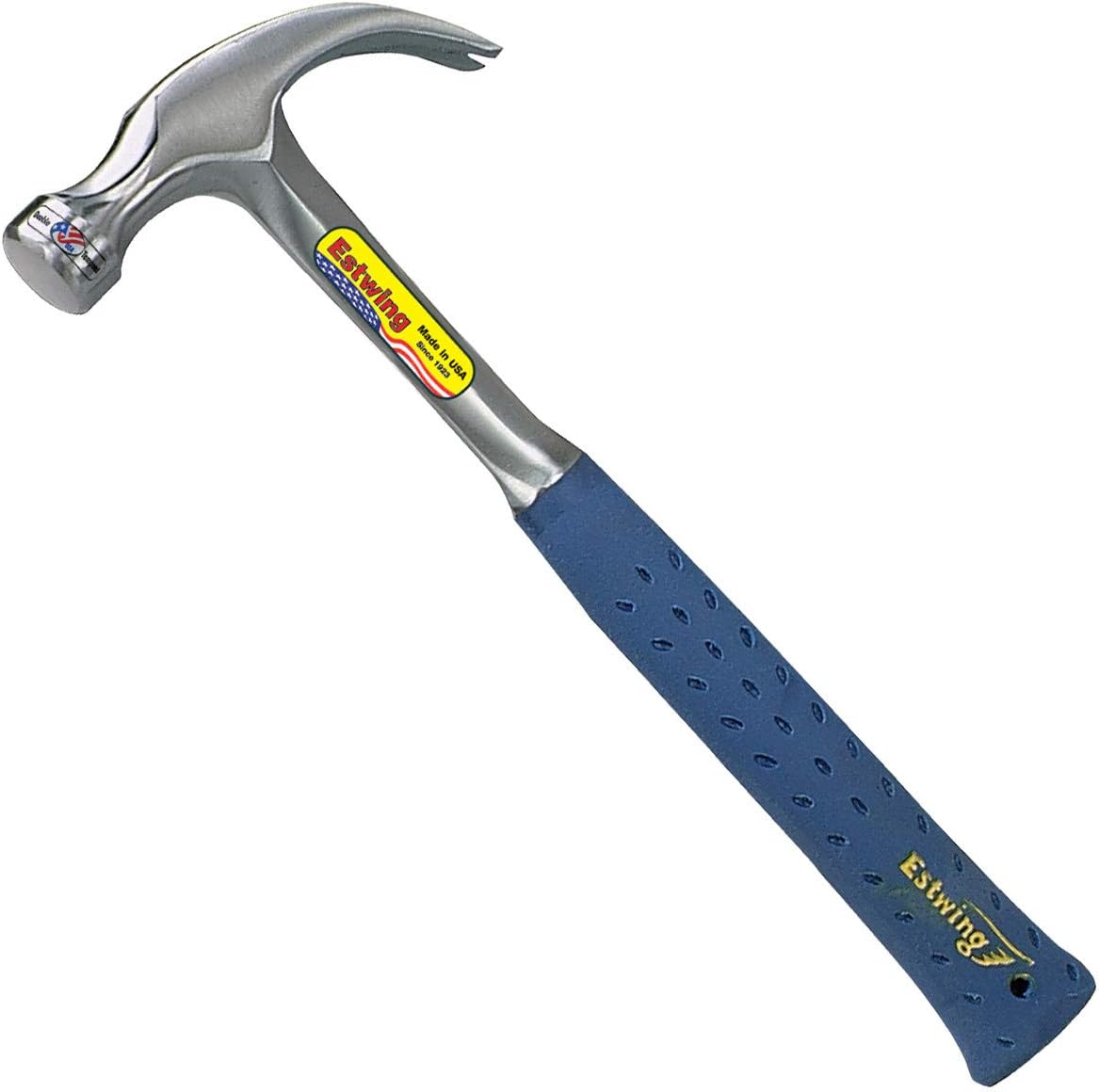
Estwing E3-16C 16 oz
The legendary American-made one-piece steel hammer that lasts a lifetime, with a nylon-vinyl Shock Reduction Grip.
Pros
- Forged in one piece — nearly indestructible
- Made in the USA with decades of pedigree
- Polished smooth face leaves clean marks
Cons
- More vibration than fiberglass or wood
The Estwing is the hammer your grandfather probably owned and it's still going. Forged from a single piece of American steel, it is about as close to indestructible as a hand tool gets. The trade-off for that one-piece toughness is a bit more vibration than fiberglass — the nylon-vinyl Shock Reduction Grip helps, but you'll still feel a hard hit. Buy it if you want a hammer you'll hand down.
5. STANLEY 20 oz Fiberglass — best heavy-duty value
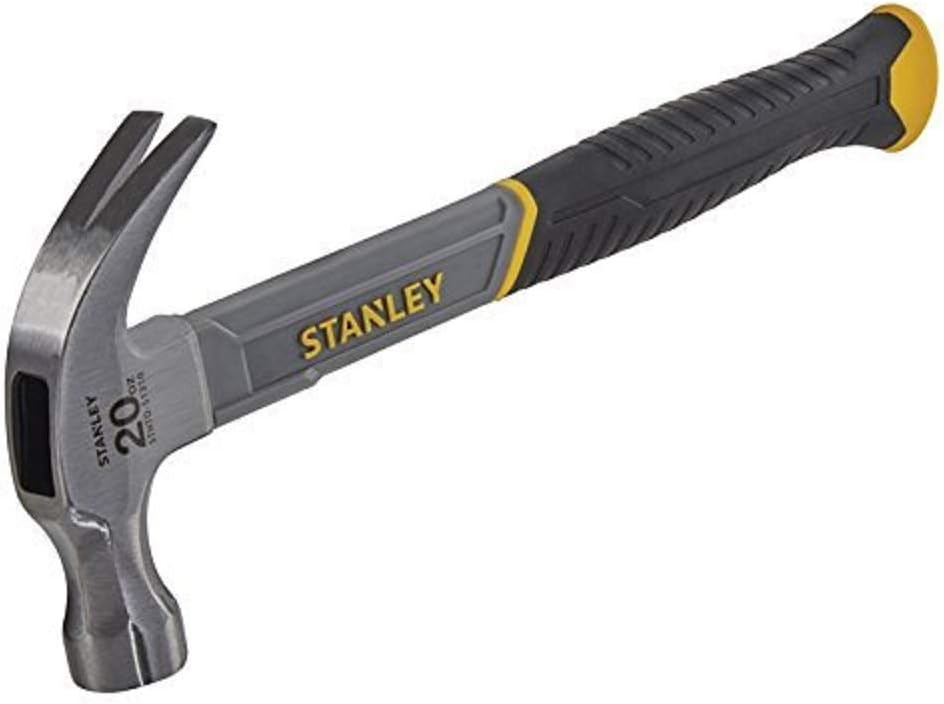
STANLEY 20 oz Fiberglass
A 20 oz fiberglass-handled hammer with extra mass for driving bigger nails without stepping up to a framing hammer.
Pros
- Extra 20 oz mass drives larger nails with fewer swings
- Fiberglass handle absorbs shock
- Affordable for the size
Cons
- Heavier than ideal for fine finish work
If you find a 16 oz hammer leaves you swinging too many times on bigger nails, but you don't want a full framing hammer, the 20 oz STANLEY splits the difference. The extra mass drives larger nails with fewer swings, the fiberglass handle keeps the shock down, and the price stays friendly.
Build out the rest of your kit
A hammer is step one. Once it's in the drawer, the next tools most DIYers reach for are a good ratchet screwdriver, a solid pair of pliers, and a cordless drill — and a tape measure you can actually read to make sure everything lines up.
Frequently asked questions
What size hammer is best for general DIY?
A 16 oz claw hammer is the best all-round choice. It has enough mass to drive nails efficiently but stays light enough to control for detail work and longer sessions.
Is a steel, fiberglass or wood handle better?
Forged steel is the most durable and can never come loose, but transmits the most vibration. Fiberglass is the best balance of toughness, shock absorption and price. Wood is the most comfortable to swing but needs the most care. For most people, fiberglass or one-piece steel is the right call.
Do I need a framing hammer?
Only if you're framing walls, building decks or doing demolition. A 22 oz milled-face framing hammer like the Spec Ops drives big nails fast, but its weight and waffle face make it a poor choice for trim, drywall and everyday repairs.
About the Author
Cheryl Thompson
Cheryl Thompson is the tools editor at The DIY Tool Review. A lifelong fixer and self-confessed tool addict, she has spent years buying, borrowing and wearing out hand and power tools across home renovation, furniture building and everyday repairs. She writes hands-on, no-nonsense reviews to help fellow DIYers spend their money on the tools that actually last.