How to Use a Tape Measure Like a Pro (2026)
Read the markings, master the loose hook, and burn an inch like a carpenter — then see the five tape measures we'd actually buy, led by the Stanley FatMax 25 ft.

- Category
- Measuring & Layout
- Tools tested
- 5
- Read time
- 8 min
- Updated
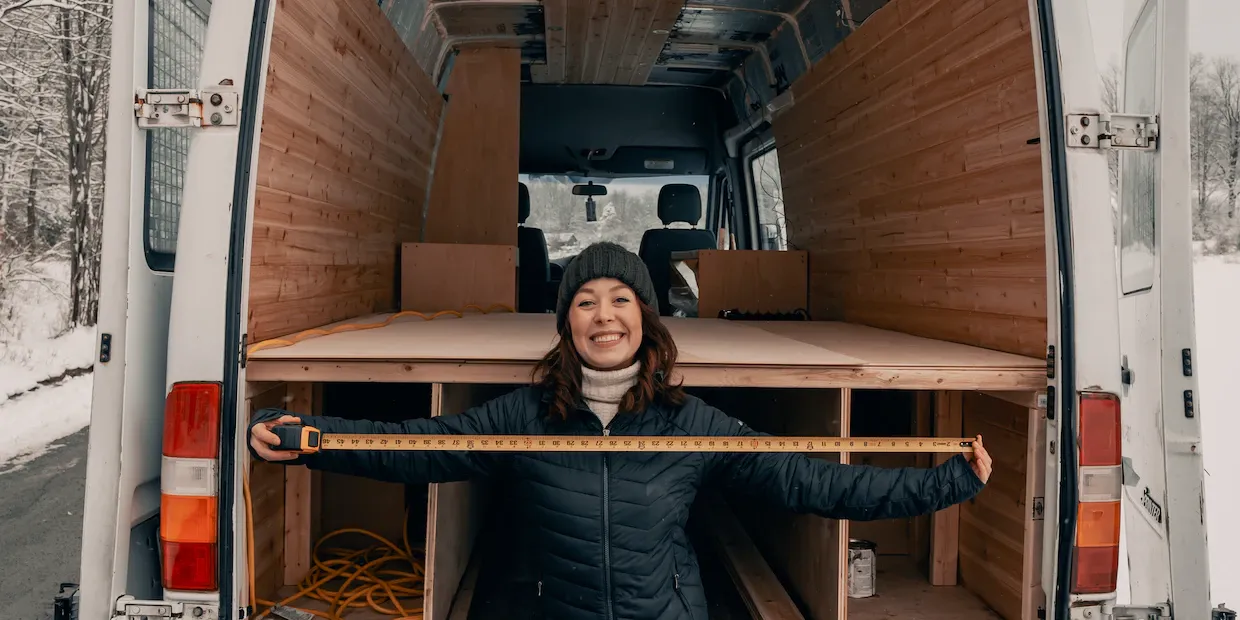
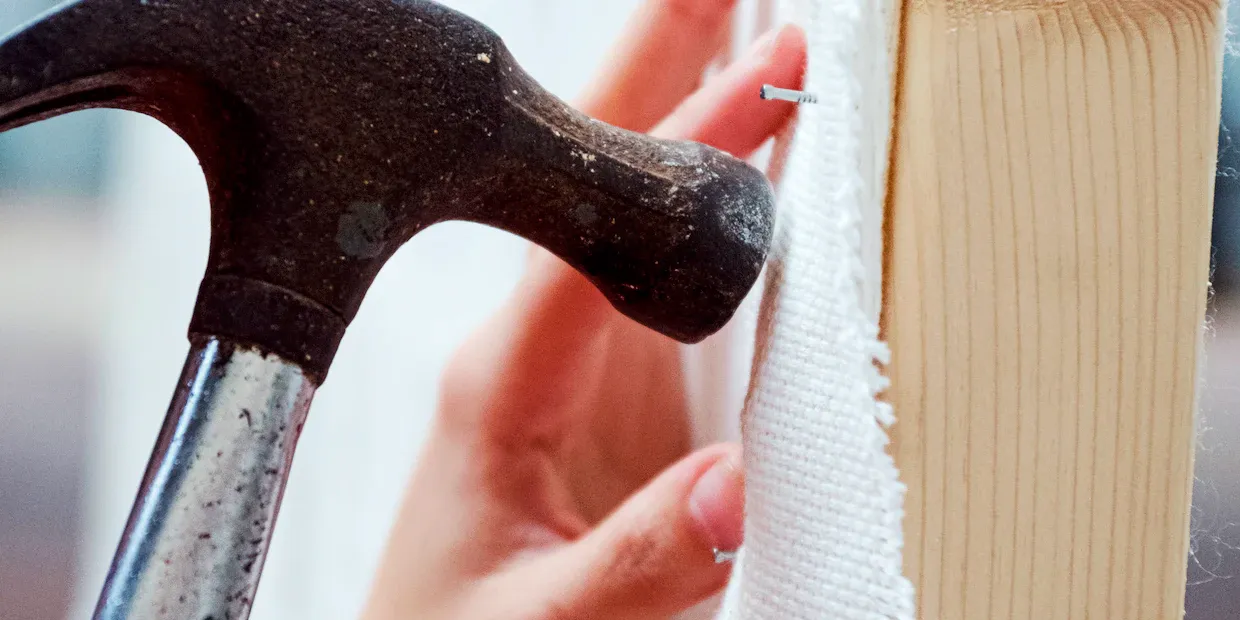
A tape measure looks like the simplest tool in the drawer, but the difference between a sloppy DIYer and someone whose cuts always fit comes down to a handful of small habits. Once you know what the marks mean, why the hook wiggles, and when to "burn an inch," you'll measure faster and more accurately than most people ever do. Pair good technique with the right tape — and a claw hammer you trust — and your projects come together a lot cleaner.
Below we walk through the techniques the pros use every day, then recommend the five tape measures we'd actually buy.
At a glance: our top picks
Drag to compare all 5 →
Our overall pick is the Stanley FatMax 25 ft two-pack — a long standout, useful stud marks, and a spare in the box make it the one we hand to almost everyone. If you just want the most tape for your money, the DeWalt 25 ft two-pack is hard to beat.
How to read a tape measure
Most people only ever read the big numbers. The whole rest of the blade is there to make you faster and more accurate.
The fractions between the inches
Each inch is split by lines of different lengths. The longest line is the half-inch, the next size down marks the quarter-inches, then eighths, and the shortest ticks are sixteenths. A good habit: count down from the nearest whole or half-inch rather than squinting at every tick. Many tapes, including the Milwaukee below, also print the fraction values right on the blade so you don't have to count at all.
The black diamonds (stud marks)
You'll see small black diamonds at roughly 19.2-inch intervals. Those are joist or "stud" marks for spacing five trusses or floor joists evenly across an 8-foot sheet. They aren't a mistake or decoration — they're a layout shortcut.
The red numbers every 16 inches
The red numbers (16, 32, 48, 64…) mark standard 16-inch on-center stud spacing. Hook your tape on one corner, and every red number lands exactly where the next wall stud should go. The FatMax carries both 16-inch and 19.2-inch references, which is why it's such a good framing and layout tape.
Why the hook is loose (it's not broken)
Pick up any quality tape and wiggle the metal end hook — it slides back and forth a little. This is intentional, and it makes your measurements accurate. The hook moves by exactly its own thickness.
- Measuring an outside edge (hooking the tape over the end of a board): the hook is pulled, so it slides out, and the gap it leaves equals its own thickness — giving you a true zero.
- Measuring an inside corner (butting the hook against a wall): the hook is pushed in by that same thickness, again landing on true zero.
This is "true-zero" design, and Stanley calls its version a Tru-Zero hook. If you ever epoxy or crimp that hook tight to "fix" it, you'll throw off every measurement. Leave it loose.
Pro techniques worth learning
Burn an inch for critical cuts
When precision really matters, don't measure from the hook at all. Start your measurement from the 1-inch mark instead, then subtract one inch from the final number. This is "burning an inch." It takes the slightly imprecise hook out of the equation entirely and lets you line up a crisp, full line against your reference edge. Just don't forget to subtract — measure 25 inches, mark at 26.
Use standout and reach
Standout is how far the blade extends before it folds under its own weight. A long standout lets you measure across a room solo, without a helper holding the other end — a wide, stiff blade like the FatMax's reaches farther than a thin one. To measure an inside span, push the blade into the corner and read where the blade bends, or read the case length printed on the housing and add it.
Hook tricks
That little hook does more than catch an edge. The slot in it grabs a screw or nail head so you can pivot the tape to scribe an arc. The serrated edge on many hooks lets you scratch a quick mark when you don't have a pencil handy, and the tang's bottom edge can hook under a board for overhead measurements.
The 5 tape measures we'd buy
1. Stanley FatMax 25 ft, 2-Pack — our pick

Stanley FatMax 25 ft 2pk
A two-pack of 25 ft FatMax tapes with a long standout, Tru-Zero hook and stud marks — the best all-round pick for most DIYers.
Pros
- Long standout reaches across a room before the blade folds
- 16 in and 19.2 in stud center marks for framing and layout
- Comes as a two-pack, so you always have a spare
Cons
- Wide 1-1/4 in blade makes a chunky pocket carry
The FatMax is the tape we recommend first because it does the everyday stuff better than anything in its price range. The wide 1-1/4-inch blade gives a long standout, so you can run it across a room without it collapsing, and a blade-armor coating resists the wear that usually kills a tape. It carries both 16-inch and 19.2-inch stud references and a corrosion-resistant Tru-Zero hook, and because it's a two-pack you've got a backup for the truck. For most DIYers, the FatMax two-pack is the obvious buy.
2. DeWalt 25 ft, 2-Pack — best value

DeWalt 25 ft 2pk
Two rugged 25 ft DeWalt tapes for the price most brands charge for one — a great value if you keep losing tapes.
Pros
- Two 25 ft tapes in one box
- Tough housing built for jobsite abuse
- Easy-to-read standard markings
Cons
- No stud-mark or fractional scale on the blade
If you're the kind of person who is forever setting a tape down and losing it, the DeWalt two-pack is your friend. You get two genuinely rugged 25-foot tapes for roughly what a single name-brand tape costs, with a tough housing that shrugs off jobsite abuse and clean, easy-to-read standard markings. It skips the stud-mark and fractional printing, but as a do-the-job, keep-one-everywhere tape, the DeWalt pack is excellent value.
3. Stanley PowerLock 35 ft — longest reach

Stanley PowerLock 35 ft
The classic Mylar-coated PowerLock, here in a long 35 ft length for measuring rooms, runs and yards.
Pros
- Extra 35 ft length covers long walls and exteriors
- Mylar coating protects the printed numbers
- Time-tested, simple slide blade lock
Cons
- Shorter standout than a modern FatMax
When 25 feet isn't enough — long walls, fence runs, room-to-room layout — the classic PowerLock in its 35-foot length steps up. This tape has been in tradespeople's pouches for decades, with a Mylar coating that protects the printed numbers and a simple, reliable slide lock. The standout isn't as long as a modern FatMax, so for very long spans you may want a second set of hands, but for sheer length and proven durability the PowerLock 35 ft earns its keep.
4. Klein 9216 16 ft Double-Hook — best for trades
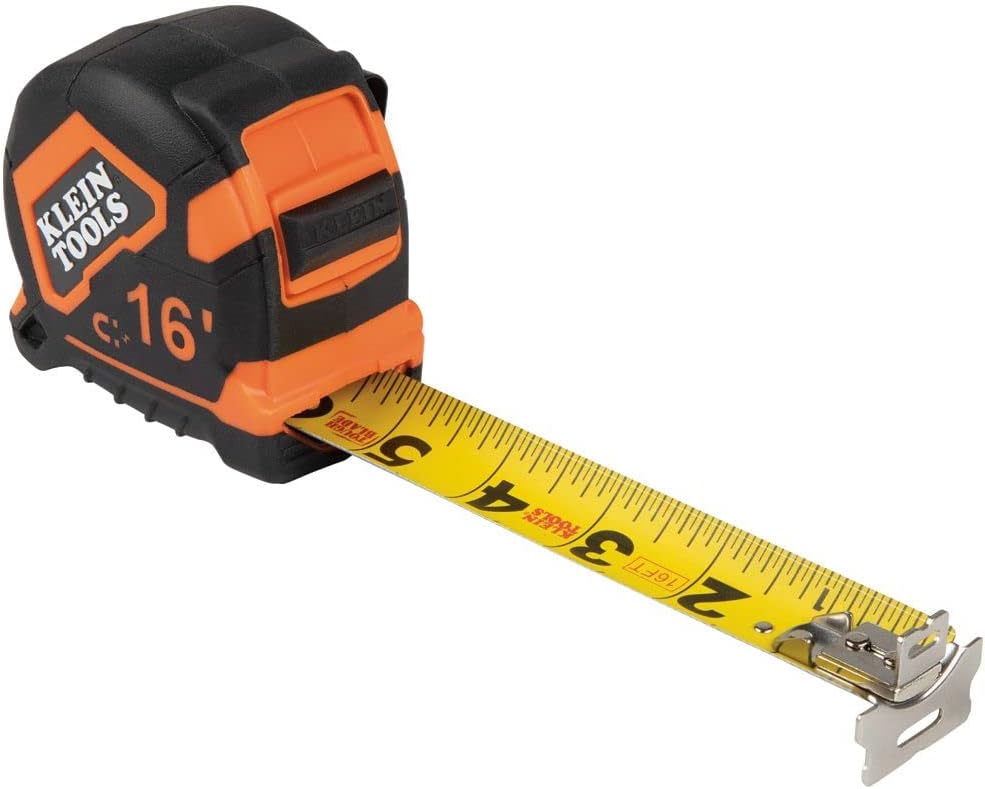
Klein 9216 16 ft
A double-hook, double-sided, magnetic 16 ft tape built for electricians and anyone working solo.
Pros
- Magnetic double hook grabs studs, conduit and pipe
- Double-sided blade reads from either orientation
- Retraction speed brake stops painful blade snap-back
Cons
- 16 ft is short for big rooms or exterior work
Klein built this one for electricians and anyone who works alone. The standout feature is the magnetic double hook — it grabs studs, conduit and pipe so the tape stays put while you measure single-handed. The blade is double-sided, reading right-side up no matter how you hold the case, and a retraction speed brake stops the blade from snapping back and slicing your fingers. At 16 feet it's short for big rooms, but for trade work and tight spaces the Klein 9216 is a joy.
5. Milwaukee 48-22-6825 25 ft Compact — most durable
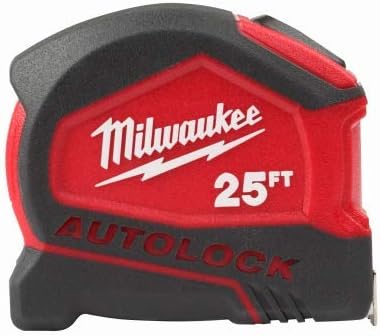
Milwaukee 25 ft Compact
A compact 25 ft auto-lock tape with a 5-point reinforced frame and nylon-bonded blade for drop-prone jobsites.
Pros
- 5-point reinforced frame survives drops
- Auto-lock holds the blade without a thumb button
- Compact body and fractional blade markings
Cons
- Auto-lock isn't ideal when you want a free-running blade
Milwaukee's compact tape is the one to buy if you're hard on tools. A 5-point reinforced frame and nylon-bonded blade survive drops and resist the grit that wears a blade out, and the auto-lock mechanism holds the blade without you thumbing a button. Fractional markings are printed on the blade, and the scoring hook lets you scratch a quick layout mark. The auto-lock isn't for everyone — sometimes you want a free-running blade — but for ruggedness the Milwaukee compact is the pick.
Build out your kit
A tape measure is rarely used alone. Once your measurements are dialed in, you'll want a claw hammer for assembly, a cordless drill for driving and boring, and a good pair of pliers for the fiddly bits. If you're still assembling the basics, start with our guide to the essential DIY tool kit.
Frequently asked questions
Why is the hook on my tape measure loose?
It's supposed to be. The hook slides by exactly its own thickness so that you get a true-zero reading whether you're hooking over an outside edge (the hook pulls out) or butting against an inside surface (the hook pushes in). Don't tighten or glue it — that's what makes the measurement accurate.
What does "burn an inch" mean?
It's a trick for critical cuts: instead of measuring from the slightly imprecise hook, you start at the 1-inch mark and subtract one inch from the result. Lining a clean line up against your reference is more accurate than relying on the hook, as long as you remember to subtract the inch you burned.
What length tape measure should I buy?
A 25-foot tape is the sweet spot for most home DIY — long enough for rooms and lumber, compact enough to carry. Step up to a 35-foot tape like the PowerLock for long walls and exterior work, or grab a short 16-foot tape like the Klein for close-quarters and trade tasks.
About the Author
Cheryl Thompson
Cheryl Thompson is the tools editor at The DIY Tool Review. A lifelong fixer and self-confessed tool addict, she has spent years buying, borrowing and wearing out hand and power tools across home renovation, furniture building and everyday repairs. She writes hands-on, no-nonsense reviews to help fellow DIYers spend their money on the tools that actually last.